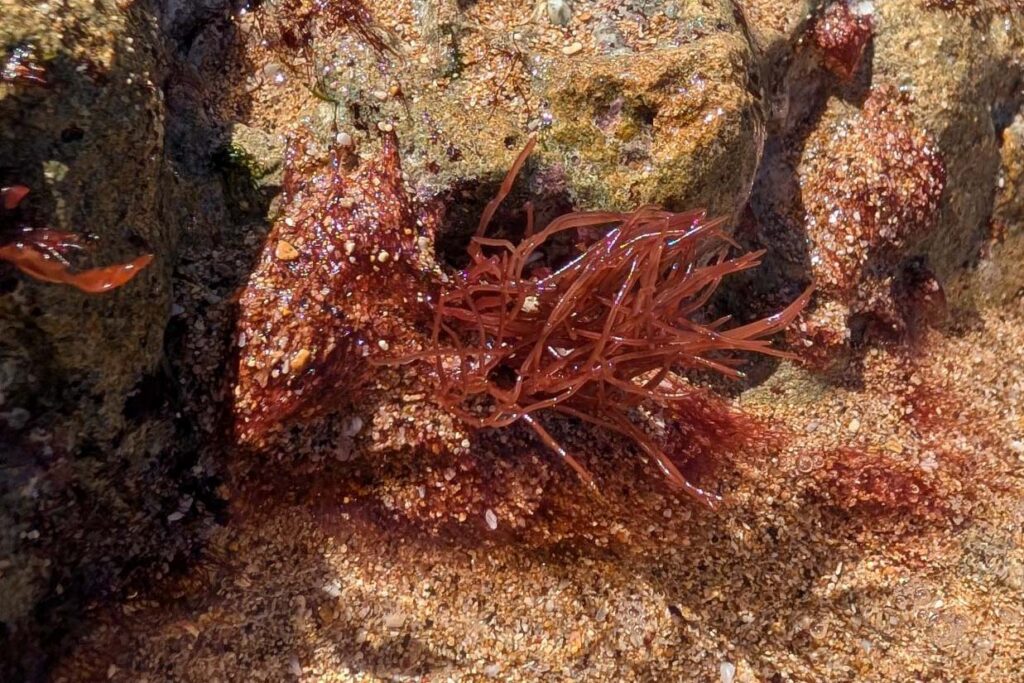
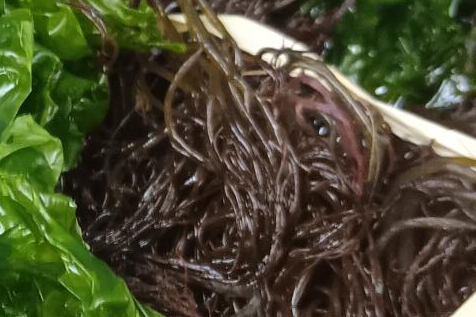
Limu manauea is a crisp, branching red limu traditionally enjoyed as food in Hawaiʻi. Once common along island shorelines, it became highly sought after for its tender texture and is still valued in many favorite local dishes today.
Did You Know?
Limu manauea isn’t just used as food. Members of the Gracilaria group produce agar, a substance used in everything from foods to microbiology and molecular biology laboratories.
Quick Facts
Color
Dark rose to pink, sometimes with a greenish tint
生息地
Tidepools and shallow subtidal waters
Form
Crisp, rounded clumps with repeatedly branching cylindrical stems
About Limu Manauea
Limu manauea grows in crisp clumps approximately 4 to 6 inches tall. Its branches repeatedly divide, creating a rounded, bushy appearance. Most of the branches are cylindrical and remain approximately the same width throughout the plant.
Its color can range from dark rose to pink, sometimes taking on a greenish cast.
Limu manauea grows in tidepools and shallow coastal waters at depths of up to approximately 4 meters.
A Favorite Local Limu
Limu manauea has long been valued as a food and is enjoyed in Hawaiian, Filipino and Japanese culinary traditions. Its crisp, tender texture made it one of Hawaiʻi’s most sought-after wild limu species.
It is also commonly referred to as ogo, a Japanese term used for Gracilaria. However, the seaweed commonly sold as ogo in fish markets may be a different species of Gracilaria.
From the Reef to the Laboratory
Species of Gracilaria are also important because they produce agar, a substance with uses far beyond the kitchen.
Agar and its component agarose are used in foods as well as in scientific laboratories, where they can provide growth media for microorganisms and are used in cell and molecular biology procedures.
A Limu Worth Protecting
Limu manauea was once common around Hawaiian shorelines. Before the 1960s, it was particularly abundant around Oʻahu in rocky coastal areas near sand or freshwater streams.
As demand for the limu increased, many natural populations declined. Its popularity has even presented challenges for scientists attempting to study and restore it in the wild.
Protecting reproductive plants is one way natural populations can be given an opportunity to replenish themselves. Hawaiʻi regulations prohibit the collection of plants bearing dark reproductive structures.
Traditional Gathering and Preparation
The youngest, tender portions of limu manauea are prized for their crisp texture.
Traditionally, the limu can be rinsed in fresh water and finely chopped for use. For later use, it may be lightly salted and refrigerated. It can also be frozen successfully.
Limu Manauea Recipes
Explore favorite ways to prepare and enjoy this crisp, versatile limu.
Lomi Salmon with Ogo
A refreshing local favorite combining salted salmon, crisp ogo, tomatoes and Maui onion.
Ingredients
1 pound salted salmon
3 medium tomatoes
2 Maui onions
2 stalks green onions
2 cups ogo
Ice for chilling
Instructions
Wash the excess salt from the salmon and soak it in fresh water for several hours. Drain and cut the salmon into bite-sized pieces.
Chop the tomatoes, onions and ogo and combine with the salmon. Add salt to taste. Place ice over the mixture to chill, removing any remaining ice before serving. Serve as a side dish or appetizer.
Ogo Guacamole
Creamy avocado meets crisp ogo, Maui onion and a touch of heat in this island-inspired dip.
Ingredients
1 cup ogo, chopped
2 large ripe avocados
Juice of ½ lemon
1 medium tomato, chopped
1 small Maui onion, chopped
Salt and pepper to taste
Hot pepper sauce or minced chili peppers to taste
Instructions
Cut the avocados in half, remove the seeds and scoop out the pulp. Mash coarsely with a fork while blending in the lemon juice.
Add the tomato, onion and ogo. Season with salt, pepper and hot pepper sauce or minced chili peppers to taste. Serve with corn chips.
Pickled Ogo
Crisp ogo marinated with shoyu, sesame, garlic and chili for a savory, tangy bite.
Ingredients
2 pounds ogo
1 teaspoon dark sesame oil
1 teaspoon sesame seeds
2 cloves garlic, minced
½ round onion, sliced
½ chili pepper, minced
2 tablespoons cider vinegar
¾ cup shoyu
1 tablespoon sugar
¼ teaspoon black pepper
Instructions
Wilt the seaweed if desired, drain well and chop into approximately 4-inch sections.
Combine the remaining ingredients and pour over the prepared limu. Mix well, pack tightly into glass jars and refrigerate for at least one day before serving.
Ogo-Cucumber Salad
A cool, creamy salad combining crisp ogo, cucumber and Maui onion.
Ingredients
1 pound ogo
1 cup Hawaiian rock salt
2 medium cucumbers, peeled and thinly sliced
1 small Maui onion, sliced into rings
8 cups water
¼ cup cider or tarragon vinegar
1 pint sour cream
1 tablespoon shoyu
Salt and pepper to taste
Instructions
Cut the ogo into approximately 6-inch pieces. In a large mixing bowl, combine the rock salt and water to make a concentrated saltwater solution. Add the cucumbers, onions and ogo and let stand for four hours.
Drain and gently squeeze out excess water, then transfer the vegetables to another bowl. Combine the remaining ingredients and pour over the wilted vegetables. Mix well, chill and serve.
Fresh sliced mushrooms and bean sprouts may also be substituted.
Chicken Soup with Ogo
A comforting chicken broth with ogo, mushrooms, ginger, squash and green onions.
Ingredients
½ pound ogo
1 cup chicken meat
4 cups chicken stock
2 dried mushrooms or 6 large fresh mushrooms, sliced
1 thumb-sized piece ginger root, thinly sliced
1 teaspoon salt
1 cup green onion, chopped
1 squash, cubed
Instructions
Clean and wash the ogo and cut it into 4- to 5-inch sections. Divide among serving bowls and set aside.
In a medium saucepan, boil the chicken in the stock for five minutes. Add the mushrooms, ginger, squash and seasonings and simmer for another 10 minutes.
To serve, pour the very hot soup over the ogo and garnish with green onions. Ground pork may be substituted for chicken.
Candied Ogo
A unique sweet-and-savory treat made with ogo, brown sugar and toasted sesame flavors.
Ingredients
2 cups brown sugar
1 cup water
½ cup sesame seeds
¼ teaspoon sesame oil
1 teaspoon vanilla extract
4 cups ogo, chopped into 4-inch pieces
Instructions
Boil the sugar, water, sesame seeds and sesame oil until a thick syrup forms. Continue cooking at 270°F to 290°F until the mixture reaches the soft-crack stage.
Remove from heat and add the vanilla and ogo, stirring constantly. Pour onto a greased shallow baking pan and spread into a thin layer. Allow to cool, then dry in the sun for several hours. Cut into approximately 1-inch squares and store in the freezer.
Maui Ocean Center is expecting higher-than-usual attendance. Prices have been adjusted to reflect this increase. We recommend purchasing tickets in advance.