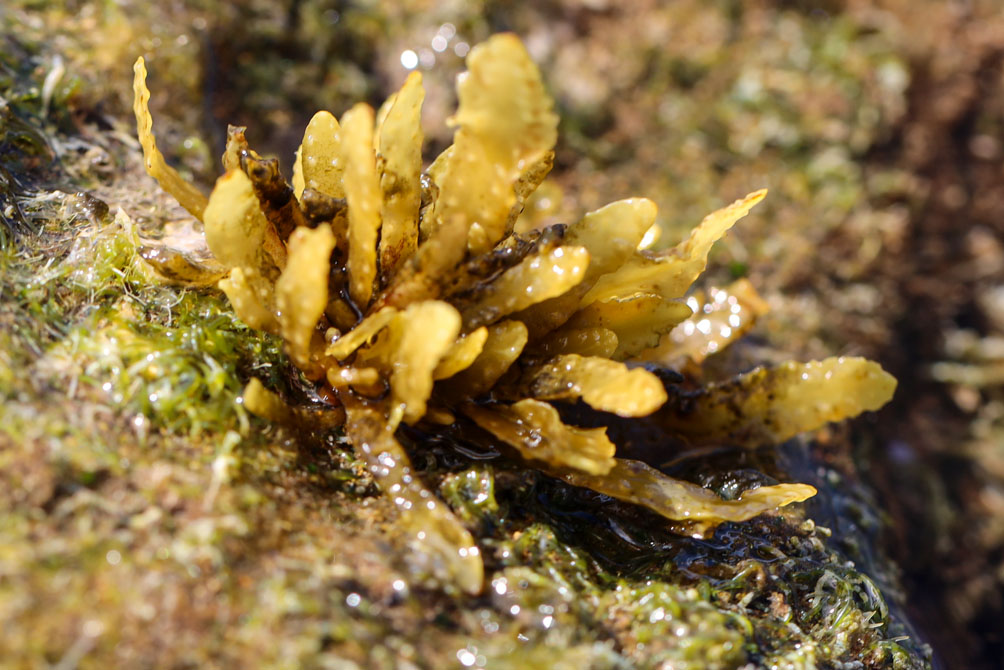
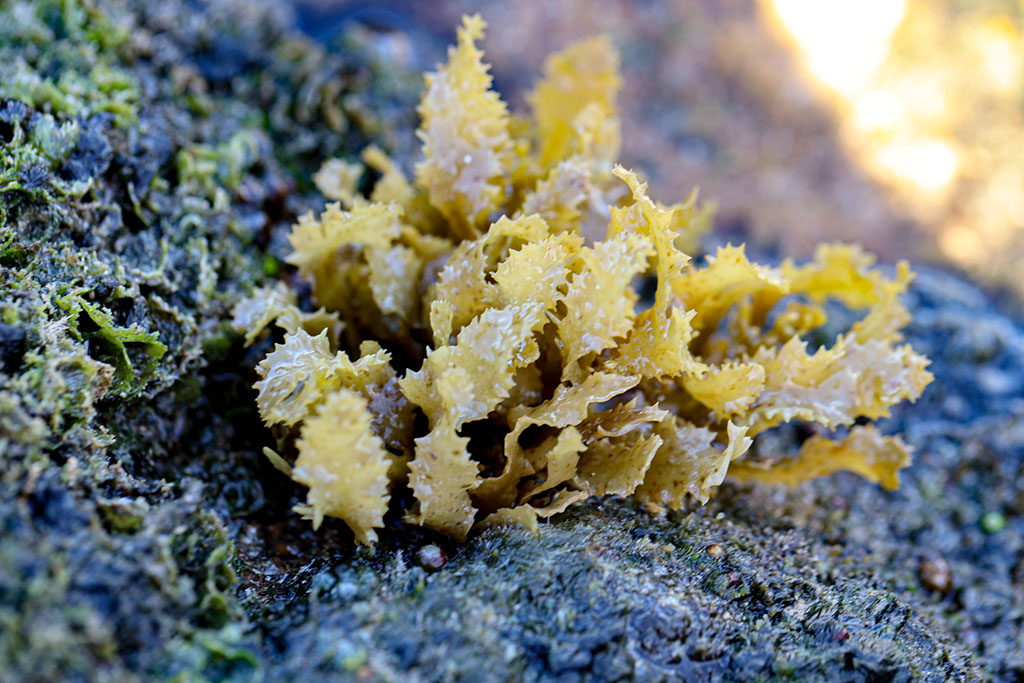
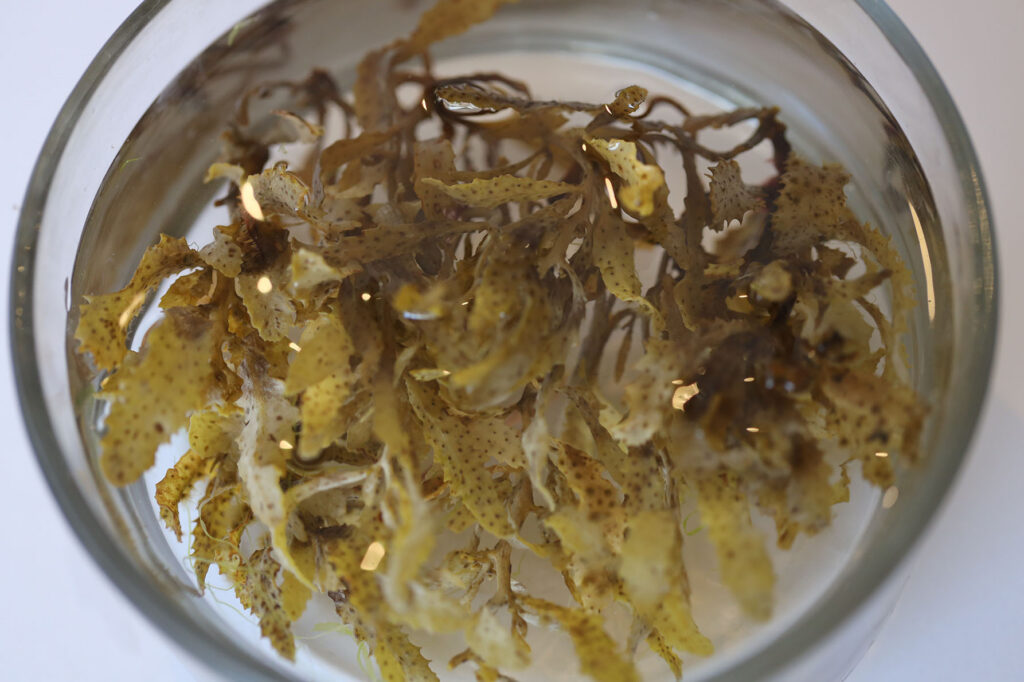
Limu kala is an endemic Hawaiian brown limu with deep cultural significance. Traditionally used for food, medicine and ceremonies, it is especially associated with cleansing, forgiveness and reconciliation.
Did You Know?
Limu kala is an important part of Hawaiʻi’s reef ecosystem, providing food for honu and several species of fish.
Quick Facts
Color
Golden brown
Habitat
Rocky intertidal areas and reef flats with moderate wave action
Form
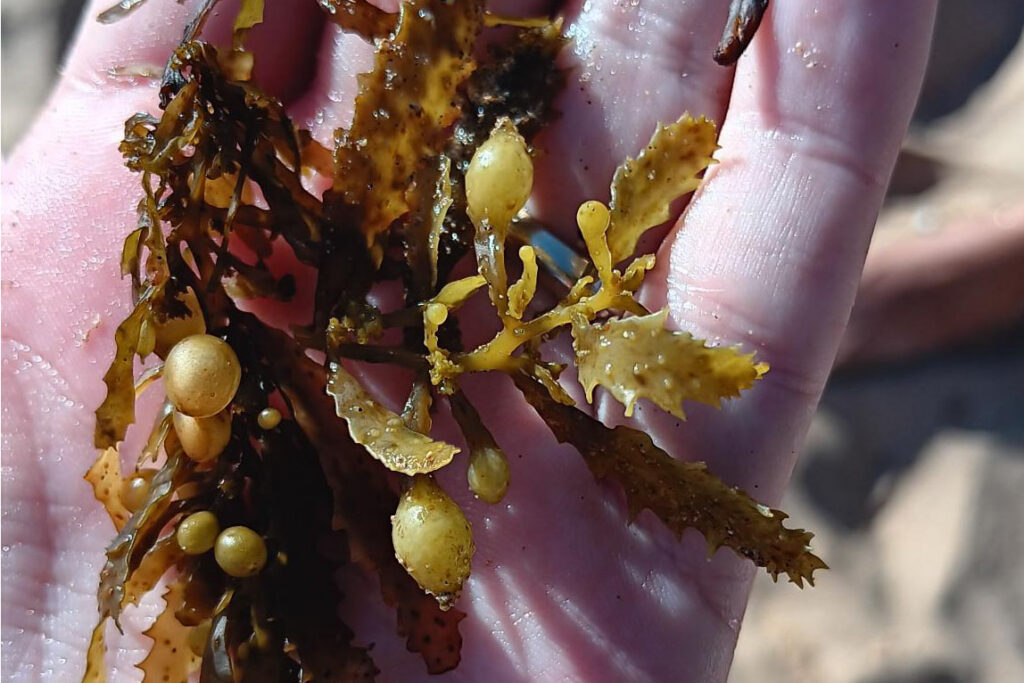
Bushy with a distinct stem, leaflike branches and small buoyant spheres
About Limu Kala
Limu kala is found throughout the Hawaiian Islands and grows approximately 10 to 20 inches high from a fleshy base. It is one of the more structurally complex brown algae, with a distinct stem and leaflike lateral branches.
Its golden-brown leaves are usually 1 to 4 inches long with a visible midrib and conspicuous dots. The edges may be smooth or have toothlike spines.
One of its most recognizable features is the small buoyant spheres found throughout the plant. These help detached pieces of limu float and travel with the water.
Where Does Limu Kala Grow?
Limu kala is abundant in mid to low rocky intertidal areas and on reef flats with at least moderate wave action.
Although it can be found throughout the year, dense populations are more common during winter and spring, particularly along shores exposed to large winter waves.
A Limu of Forgiveness and Cleansing
Limu kala holds an important place in Hawaiian cultural practices. Its name, kala, means “to forgive,” reflecting its association with forgiveness, cleansing and reconciliation.
Limu kala has been used in hoʻoponopono, a traditional practice centered on restoring harmony and resolving conflict. Participants could be given a piece of limu kala to hold while praying and then eat the limu at the conclusion of the practice as part of asking forgiveness for offenses toward one another.
It was also used for ceremonial cleansing. A kahu could combine limu kala with turmeric and salt water to purify a person, object or place.
Limu kala was also associated with ʻopelu and was traditionally used by fishers at the beginning of ʻopelu season. Many cultural uses of limu kala continue today.
An Important Food on the Reef
People aren’t the only ones with an appreciation for limu kala.
Honu, or Hawaiian green sea turtles, eat this limu, giving it another traditional name: limu honu. It is also eaten by several fishes, including palani, enenue and kala.
Limu kala has also traditionally been used as bait for certain fishes.
Traditional Gathering and Preparation
Because limu kala is common and grows in areas that can be readily reached, it was relatively easy to gather. Only the youngest leaves were selected for eating.
Limu Kala Recipes
Simple ways to prepare this versatile limu at home.
Miso Soup with Limu
Ingredients
2 Tbsp. limu līpoa
¼ cup dried shrimp
5 cups water
¼ cup miso, dissolved in 2 Tbsp. water
1 egg, beaten
Green onions
Instructions
Soak the shrimp in water for at least 15 minutes, then boil for 10 minutes or longer until tender. Add the miso mixture. Slowly drizzle the beaten egg into the water to create egg “flowers.” Stir gently and remove from heat. Just before serving in small soup bowls, add the limu and green onions.
Limu-Tofu Dressing
Ingredients
½ cup limu līpoa, salted and prepared
1 cup tofu (1/2 block)
½ clove garlic
4 tbsp. shoyu
Juice and pulp of 1 lemon
Dash of oregano
Dash of marjoram
Instructions
Chop the limu very fine. Add all ingredients to a blender and mix, adding enough water to create a creamy consistency. Use the dressing within one week.
Maui Ocean Center is expecting higher-than-usual attendance. Prices have been adjusted to reflect this increase. We recommend purchasing tickets in advance.