Limu ʻakiʻaki is a distinctive red limu commonly found growing in dense clumps on Hawaiʻi’s rocky shores. Known for its firm texture and remarkable ability to form a natural gel when cooked, it has a unique place in traditional Hawaiian food preparation.
Did You Know?
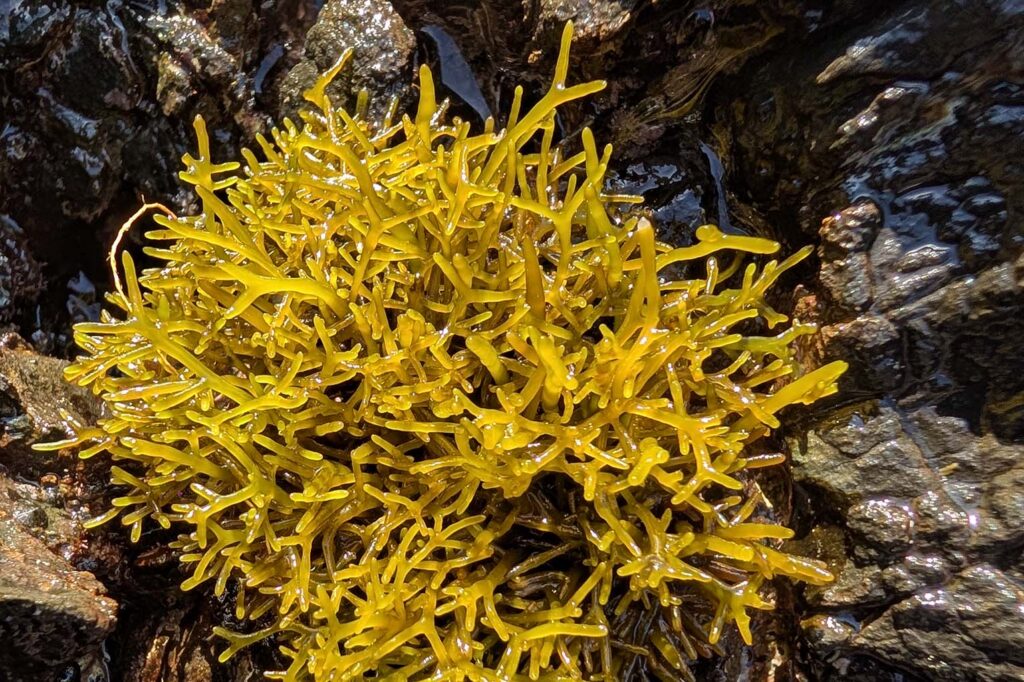
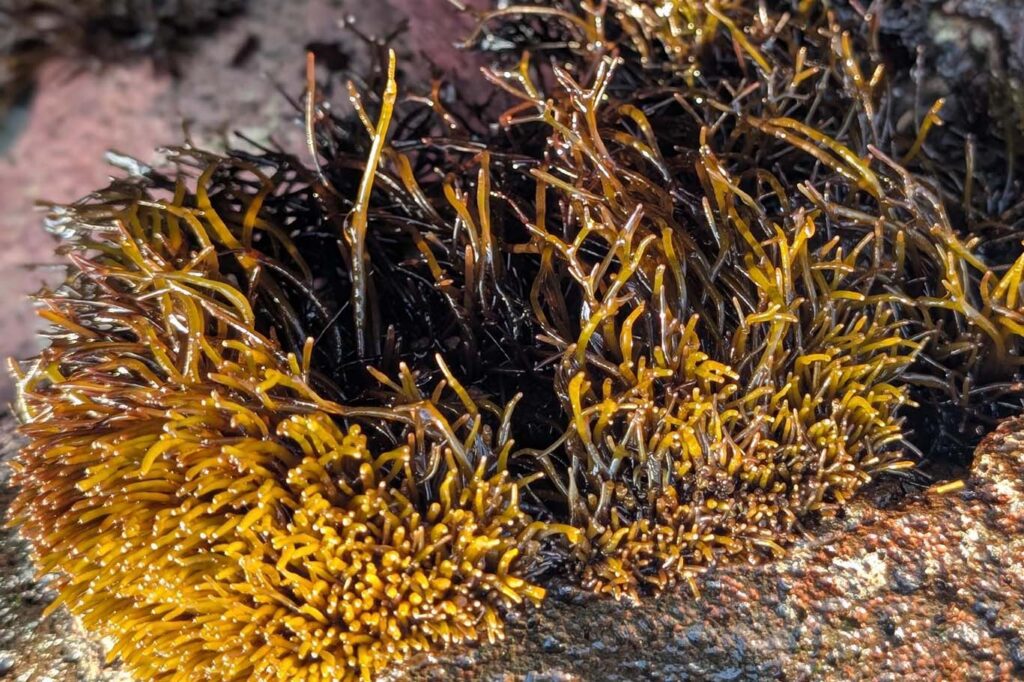
Sunlight can change the appearance of limu ʻakiʻaki. Branches exposed to full sun may become bright yellow or golden, while shaded portions of the same limu can remain deep red.
Quick Facts
Color
Deep red to golden-brown or bright yellow in full sunlight
Habitat
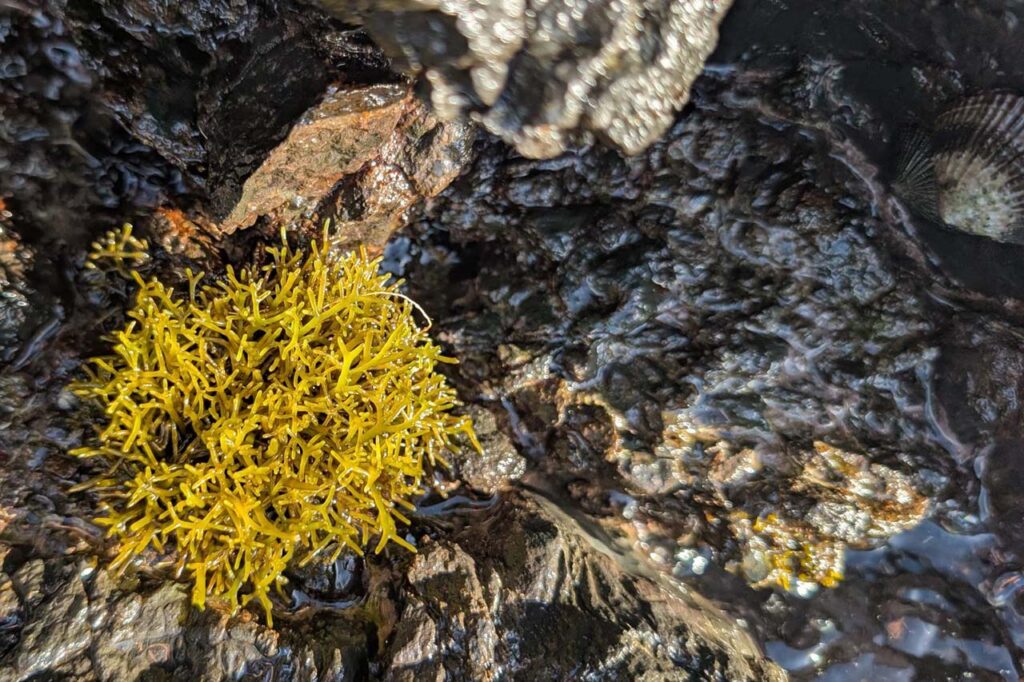
Intertidal areas, especially basalt and pāhoehoe lava rocks
Form
Thick, upright clumps with densely branching tips
About Limu ʻakiʻaki
Limu ʻakiʻaki grows in thick, erect clumps approximately 6 to 12 inches tall. Its branches become increasingly dense toward the tops of the plants, creating conspicuous patches across intertidal rocks.
Color can vary dramatically depending on sun exposure. Plants growing in shaded locations and lower portions of the limu may appear deep red, while branches exposed to intense sunlight can become golden-brown or bright yellow.
Limu ʻakiʻaki is abundant where it occurs and can be found throughout Maui, particularly on rounded lava boulders along the shoreline.
Traditional Preparation
Limu ʻakiʻaki’s firm texture is reflected in its Hawaiian name, which refers to the small bites needed to chew it.
Traditionally, it could be cooked with fish or chicken in an imu, finely chopped and combined with ʻopihi, or added to stews where its natural carrageenan helped thicken the dish.
A Limu Made for Cooking
Limu ʻakiʻaki holds a special place in traditional Hawaiian cooking. It is described as the only limu known to have been cooked by Hawaiians in underground ovens, or imu, alongside other foods.
Early Hawaiians ate it baked with fish or chicken or finely chopped with ʻopihi. In later preparations, it was also used to thicken chicken and pork stews.
Young, tender tips can be eaten fresh and added to salads.
A Natural Thickener
When limu ʻakiʻaki is cooked, it releases carrageenan, a natural substance that forms a gel.
This property makes the limu useful as a thickening ingredient in soups and stews or as a base for gelled salads. Its natural ability to change the texture of foods is one of the characteristics that distinguishes ʻakiʻaki from many other edible limu.
For a fresh preparation, the younger, more tender tips can also be eaten in salads.
Limu Recipes
Traditional and local-inspired ways to enjoy limu.
Maui Ocean Center is expecting higher-than-usual attendance. Prices have been adjusted to reflect this increase. We recommend purchasing tickets in advance.