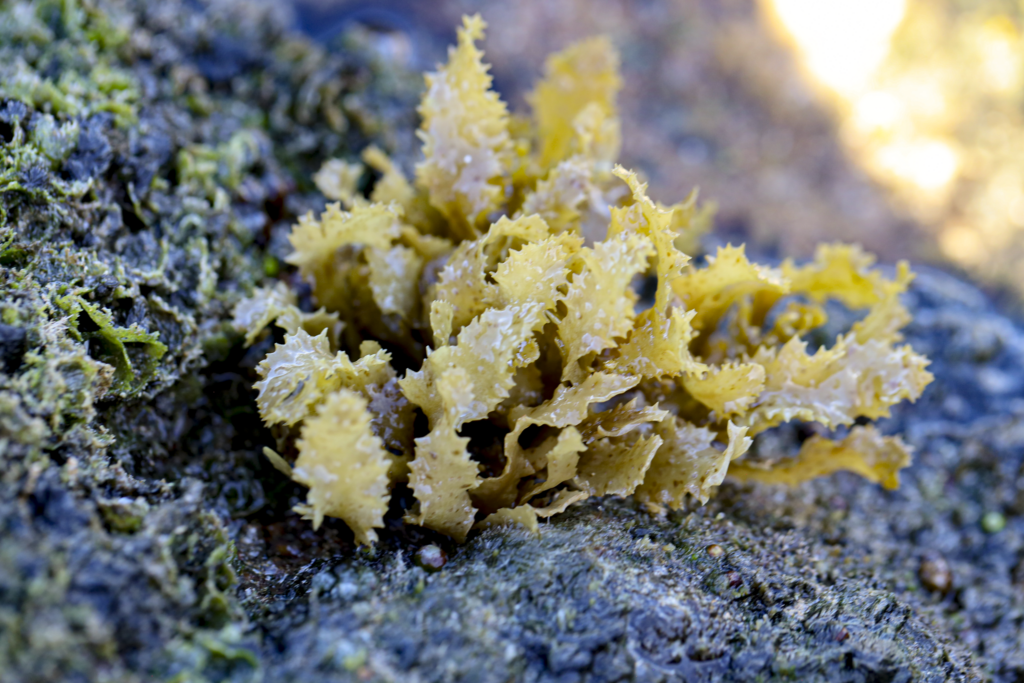
Especially abundant along rocky coasts. More than 70 species found in Hawaiian waters, at least 10 of which are endemic species (found nowhere else in the world).
What Makes Brown Limu Unique
Brown limu plays an important role in Hawaiʻi’s marine ecosystems and connects land, ocean and people.
Golden-Brown Color
Fucoxanthin, a golden-brown pigment, masks some of their natural green chlorophyll.
Built for Sunlight
Leaf-like structures called
blades capture sunlight for photosynthesis.
Rocky-Coast Habitat
Brown limu is especially abundant along rocky coasts.
Meet Hawaiʻi's Brown Limu
Explore some of the brown limu species found in Hawaiʻi.
Limu Līpoa
"LIMU THAT IS GATHERED FROM THE DEEP "
Dictyopteris plagiogramma
Limu lipoa was traditionally used as an important food source and to treat asthma. Its bold, spicy flavor made it a favorite with fish, meat and stews. "O'io (bonefish) eat this limu, usually found in 3 to 15 feet of water.
Limu kala was a symbol of forgiveness and letting go. It was traditionally used in Hooponopono ceremonies to help restore harmony and unity.
Limu and Carbon Dioxide
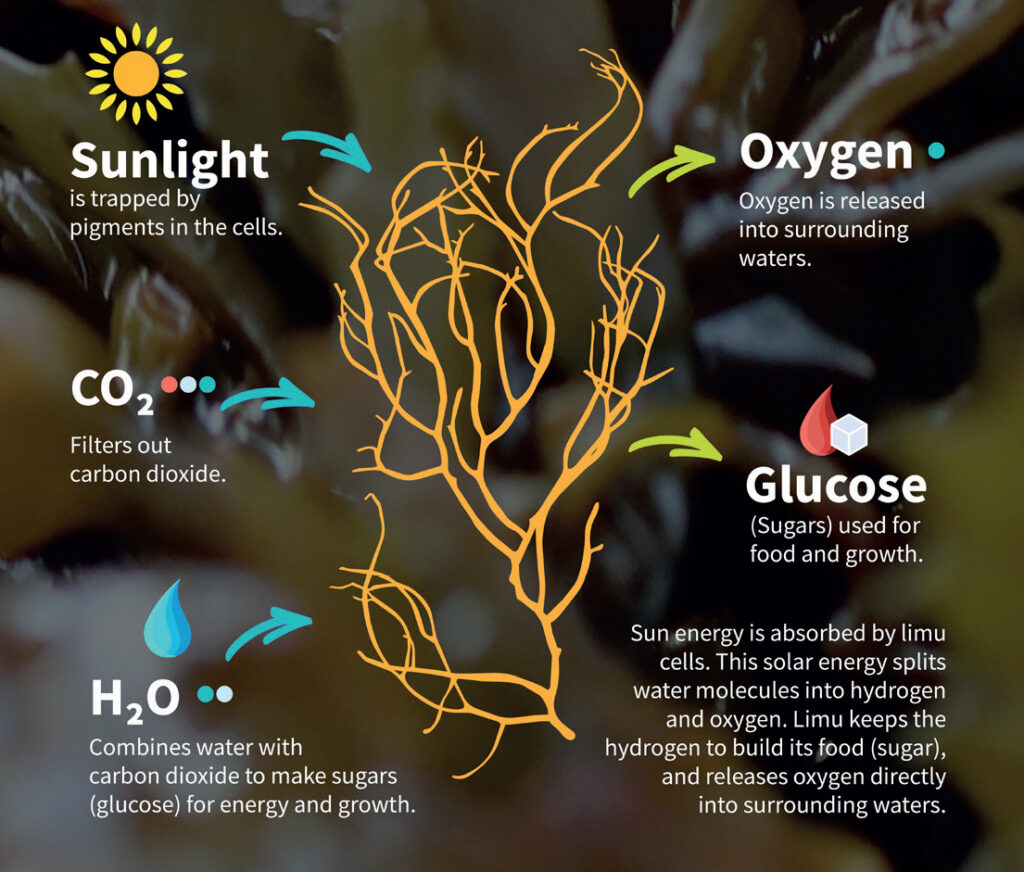
Limu absorbs carbon dioxide (CO2) from the surrounding environment, which helps cool the planet and regulate the climate.
Making Food: Photosynthesis
Sun energy is absorbed by limu cells. This solar energy splits water molecules into hydrogen and oxygen. Limu keeps the hydrogen to build its food (sugar) and releases oxygen directly into surrounding waters.