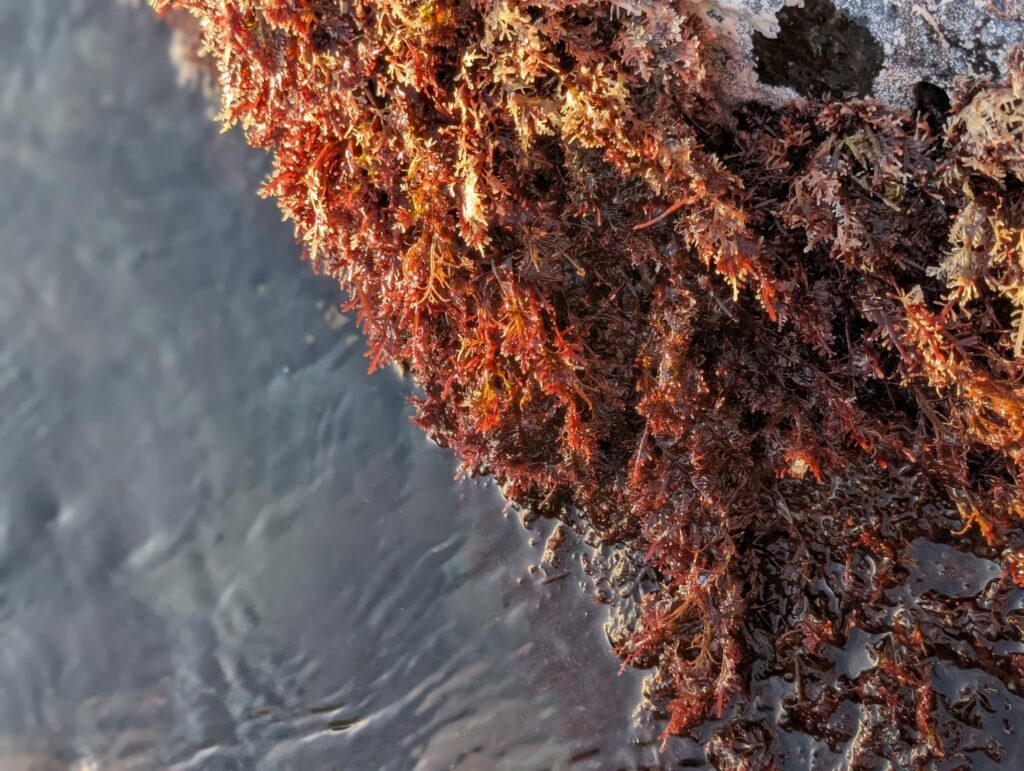
Red limu grow throughout Hawaiʻi, from tide pools to deeper reefs, wherever there is enough light and a suitable surface to attach to. More than 450 red limu species are found in Hawaiian waters – at least 75 of which are found nowhere else in the world!
What Makes Red Limu Unique
More than just seaweed, green limu plays an important role in Hawaiʻi’s marine ecosystems and connects land, ocean and people.
Many Colors
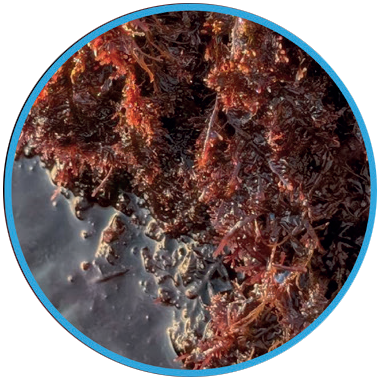
Red limu can be pink, purple, orange, brown or nearly black.
Special Pigments
Their color comes from special pigments that help them capture sunlight underwater.
Adapts to Light
In intense direct sun or shallow water, red limu may change color to protect itself.
Meet Hawaiʻi's Red Limu
Explore some of the native green limu species found in Hawaiʻi.
Certain red limu, called coralline algae, absorb calcium carbonate from ocean water and build it into their tissues. They can help cement and strengthen coral reefs.
Ancient and Diverse
Red limu are an ancient group of organisms with a history stretching back more than a billion years. Hawaiʻi is home to hundreds of species of red limu, more than brown and green limu species combined.
Cultural Significance in Hawaiʻi
Historically, limu kohu was so esteemed that it was reserved for aliʻi (royalty) and cultivated in limu gardens on various islands. Today, limu kohu is the most prized of the marketed seaweeds.
Replanting Native Limu
A limu lei is made with native limu species and attached to a pōhaku (rock), which acts as an underwater anchor. The lei is outplanted in the ocean as communities help reestablish native limu populations in threatened areas.